Research
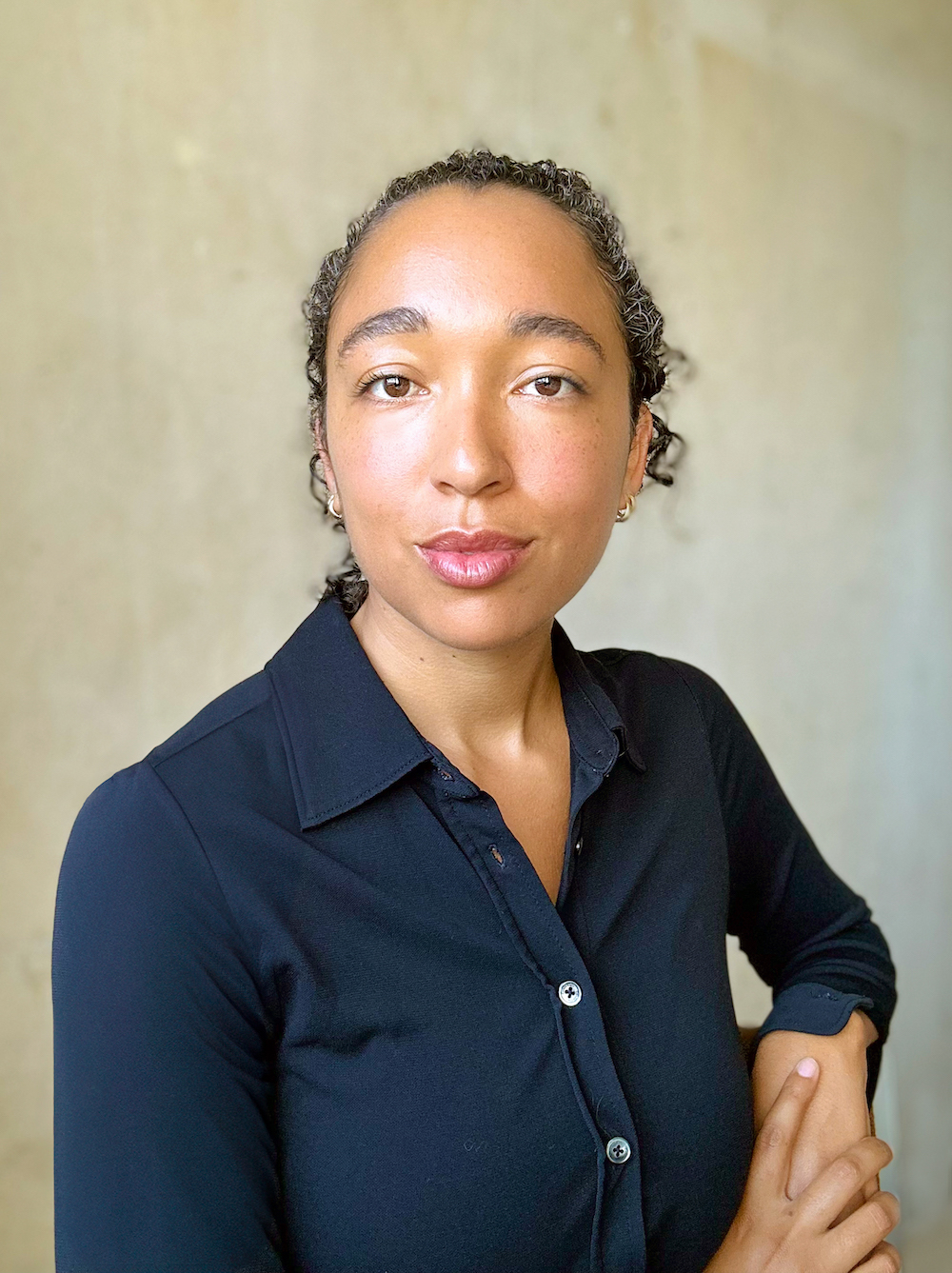
Dr. Ayasha C. Guerin is Assistant Professor of Intersectionality and Practice-Based Research and Media Making in the Department of World Arts & Cultures/Dance. An interdisciplinary artist and scholar, Guerin’s work centers socio-ecological histories, connecting human and animal experience through questions of care, companionship and relational reciprocity across Black diasporic contexts and anti-colonial struggles.
Their first book project, Black Ecologies of Zone A: More-Than-Human Relations on New York's Colonial Shoreline, forthcoming with Duke University Press, examines the historical production of New York City’s coastal flood zones as sites where ecological transformation and racial capitalism are fundamentally intertwined. Centering “Zone A,” the city’s highest-risk floodplain, it traces how colonial capitalism reshaped wetlands and shorelines into environments of extraction, enclosure, and vulnerability. Zone Aargues that flooding is not simply a natural event but a historically produced condition that emerges through the entanglement of race and property. At the same time, the book highlights waterfront spaces as sites of fugitivity, mutual aid, and abolitionist organizing, where Black and Indigenous communities cultivated relations of care with other species and survival within and against the conditions of the flood. Engaging the work of contemporary artists alongside historical archives, it foregrounds creative practice as a method for interpreting and reimagining these socio-ecological histories.
Dr. Guerin holds a PhD in American Studies from New York University.
Creative Practice
Dr. Guerin brings two decades of photography, video, and performance arts practices to their position. They have shared creative work and research in exhibitions at the Museum of the City of New York, Headlands Center for the Arts, The Center for Performance Research, New Museum’s IdeasCity, MoMA PS1, the Berlin Biennale and the Kölnischer Kunstverein, among other venues. They regularly accept invitations to present art and research at academic institutes, art galleries and museums.
From 2020-2023, Dr. Guerin was a member of the Berlin-based research collective, curating through conflict with care (CCC), which used conflict as a methodology for identifying and revealing the paradoxes of inclusive curating. These contradictions became jumping off points for advancing best practices and existing debates around curatorial responsibility. The collective archived this research with an online platform.
In 2023, Dr. Guerin founded the Liberated Planet Studio (LPS) at The Dance Centre, in Vancouver, Canada, which provided free studio space and workshop programs for artists and activists interested in ecological research, somatic methodologies and movement practices to mobilize discourse about the intersections of environmental and social exploitation and intercultural liberation. In Los Angeles, the project has evolved as a 2024 international Summer Intensive, and a 2025 Spring Artist Research Program. Dr. Guerin offers a Liberated Planet Studio graduate seminar and continues to co-develop the program for 2026 and beyond withlocal artist-collaborators.
Publications
Black Ecologies of Zone A: More-Than-Human Relations of New York's Colonial Shoreline, Duke University Press (Monograph, forthcoming, Spring 2027)
Peer Reviewed Articles:
Guerin, A. “Reading Y-Dang and Lorraine Together” Swirling into a Field of life: Works in Conversation with Y-Dang Troeung: special issue of Canadian Literature (261), November 2025, pp. 87-89
Guerin, A. “Matter and Memory: Black Feminist Poetics and Performance in Berlin, Germany” Meridians: feminism, race transnationalism. Vol 22, April 2023, pp. 115-145
Guerin, A. “Shared routes of mammalian kinship: Race and migration in Long Island whaling diasporas.” Nomadic identities, archipelagic movements, and island diasporas: a special section of Island Studies Journal, 15(2), May 2021, pp. 43-61
Guerin, A. “Underground & at Sea: Oysters and Black Marine Entanglements in New York’s Zone-A.” Shima, 13(2), October 2019, pp. 30-55
Book Chapters:
Guerin, A. “Oysters and the Black Struggle for Freedom” In Bio/Matter/Techno Synthetics (eds.) Susan Kolber & Franca Trubiano. ACTAR, New York, 2025, pp. 32-49
Guerin, A. “We, The Submerged: (Non)Humans, Race and Aquapelagic Relation” in Aquapelagos: Integrated Terrestrial and Marine Assemblages, (eds.) Philip Hayward and May Joseph. Routledge, 2024, pp. 157-173
Guerin, A. “Die Sprache die wir wählen” in Sisters and Souls 2: Inspirationen durchMay Ayim (ed) Natasha A. Kelly. Orlanda Frauenverlag, Berlin. 2021, pp. 39-49
Teaching
Dr. Guerin regularly teaches WL ARTS 183 The Video Essay and WL ARTS 186A Senior Praxis Projects during Winter Quarter. She sometimes teaches WL ARTS 33 Colonialism and Resistance, WL ARTS 24 World Arts, Local Lives and WL ARTS 102, an upper division, variable topics seminar in Spring Quarter. In our graduate program, Dr. Guerin teaches a WL 220 Culture and Performance Seminar that draws on Liberated Planet Studio practices and approaches for learning from place. In 2027-2028, she will offer two new courses: WL 127 Autotheory and WL C29 Island Movements.
Information for Current Students: Independent Studies & Internship Advising (WL 195, 199, 596A)
If you are interested in working with Dr. Guerin on an independent study in WL 199 or 596A, please include the following information in your initial email:
• A brief explanation of your project or study plan, including why Dr. Guerin’s expertise is a good fit for your proposed work.
• A preliminary reading list or set of materials you plan to engage.
• A working plan outlining the scope of the quarter’s work and a proposed timeline.
For internship-based WL ARTS 195 proposals, please also include:
• A statement of the internship’s learning objectives.
• A description of the work you will complete during the internship.
• A clear explanation of what you will submit for evaluation (e.g., written work, portfolio, report, or other deliverables).
Requests that do not include this information are unlikely to be considered. Providing these materials helps your professors determine whether they are the appropriate advisor and ensures that your project is set up for success.
Information for Prospective Graduate Students:
Thank you for your interest in my research. I receive many inquiries from prospective graduate students each year, and unfortunately, I am not able to respond to individual emails or meet with applicants prior to the admissions process. The best way to be considered for working with me is to apply through the graduate program and clearly describe your research interests and fit in your application materials. I am not able to schedule meetings or provide feedback on application materials in advance. I appreciate your understanding, and I encourage you to explore the program’s website or schedule a conversation with our SAO for additional information about admissions requirements and timelines.